The Artemis Space Network and the Rise of Space-Connected Art
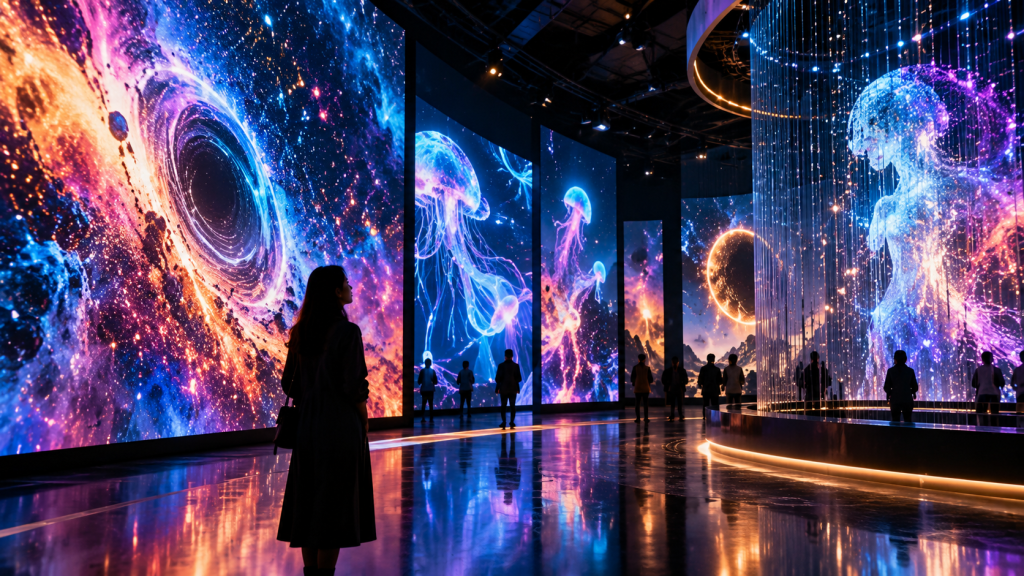
The appeal of making art with space infrastructure is not difficult to understand. A recording, image, or digital object linked to a spacecraft carries a different story from a work made entirely on Earth. Yet the engineering, permissions, and documentation behind that story matter as much as its imagery. The Artemis Space Network belongs to a period when commercial spaceflight and digital culture began to intersect in unusually visible ways.
What the Artemis Space Network proposed
Artemis Music Entertainment, based in Cape Canaveral, Florida, presented its Space Network as a way to connect artists and audiences with space-related digital experiences. That is a description of the company’s stated direction, not proof that every announced experience reached orbit. A useful historical account separates a proposed platform, an announced collaboration, and a documented mission milestone.
The concept drew on an expanding commercial space ecosystem. Space agencies still controlled critical infrastructure and safety processes, while private companies increasingly offered specialized services around research, payload integration, media, and communications. Creative projects could enter this ecosystem as customers or collaborators, but they had to work within constraints set by operators and mission partners.
Why orbital participation became culturally interesting
For decades, images from space were chiefly associated with government agencies, astronauts, and scientific institutions. Commercial partnerships changed who could propose an experiment or tell a story around a mission. Artists saw an opportunity to make distance, delay, gravity, and the fragile material conditions of orbit part of a work’s meaning.
That participation could take several forms. A digital file might be transmitted to a spacecraft; a physical object might fly as part of a payload; a performance could use telemetry as source material; or an artwork might simply take a mission as its theme. These are not interchangeable claims. Sending a file to an orbital system does not mean the associated physical artwork traveled to space.
The International Space Station as a setting
The International Space Station is a working laboratory, not an unrestricted exhibition venue. Every payload and activity has operational requirements, and crew time is especially constrained. When promotional material refers to an ISS connection, readers should ask which organization authorized the activity, what hardware or data was involved, and whether a mission record supports the description.
Space-connected art is most interesting when the operational details remain visible. A timestamp, a communications pathway, or a clear account of the payload can be part of the artwork’s provenance. Without those details, orbital language risks becoming a metaphor used as if it were verification.
Digital collectibles and the provenance problem
The early 2020s also saw growing enthusiasm for blockchain-based collectibles. Some projects treated a token as a receipt for participation in an event; others attached digital images or access privileges to it. A blockchain entry may document a transaction, but it cannot independently verify that a spacecraft performed a particular action. That claim still depends on records outside the chain.
This distinction matters for preservation. The token, the media file, the licensing terms, and the evidence of a space-related event may live in separate systems. Losing any one of them can change what a future viewer is able to understand or access. Our account of MetaMission One examines one attempt to connect digital ownership language with space culture.
Space data as artistic material
Other creative projects draw on measurements rather than collectibles. Position, orbital period, sensor readings, and communication events can become material for sound and image. The artist chooses how to translate values into perceptible form. This translation is interpretation, not a recording of what space literally sounds like.
The distinction becomes especially important when projects are discussed in news coverage. The data source, mapping rules, and degree of artistic intervention determine what a listener can infer from the result. Fallen Gravity provides a related example of orbital themes entering digital composition.
The economics behind an extraordinary claim
Space access is expensive and logistically demanding even when a creative contribution is digital. A mission can involve integration partners, launch schedules, safety reviews, communication windows, and contractual limits on what can be disclosed. The presence of a recognizable brand or artist does not remove those dependencies.
A strong editorial record therefore includes the organizations involved and their specific roles. Was a company providing the creative direction, a technical interface, the launch service, or a promotional campaign? Clear attribution avoids turning a multi-party operation into a story about a single visionary founder.
What archives should preserve
The most useful historical material includes original announcements, dated mission descriptions, credited collaborators, photographs with context, and surviving examples of the work. Screenshots alone cannot show whether an interactive experience functioned as advertised. Source files, specifications, and video documentation can help reconstruct what participants actually encountered.
Archives should also retain uncertainty. If an announcement described a future flight but no independent completion record is available, the accurate wording is that the flight was announced. That is not a failure of storytelling; it is how cultural history remains distinguishable from marketing.
A network is not the same as a spacecraft
The word network can suggest an established fleet of satellites or a dedicated orbital communications system. In this context, it is more useful to distinguish the creative network from the infrastructure that carries an experiment. A cultural initiative may coordinate artists, technology providers, rights holders, and mission partners without owning the spacecraft or the laboratory where an activity occurs. Those distinctions affect what can be verified. A press announcement may establish that a collaboration was planned, while a mission manifest or independently documented payload record provides a different kind of evidence. For readers, separating the organizer, the technology supplier, and the orbital operator is a practical way to understand the chain of responsibility.
The challenges of transmitting an artwork
Sending a digital file toward an orbital platform sounds straightforward, but the process is shaped by bandwidth, security reviews, operational schedules, and restrictions on onboard systems. An artwork may be transmitted as data, displayed on a screen, processed by a computer, or simply associated with an event through a documented record. These are different experiences. The distinction also matters for the artist: a work designed for an orbital environment may respond to the idea of distance and delay even if the audience encounters its final form on Earth. A careful account describes which part of the work traveled, what happened to it, and which elements were experienced remotely.
Public participation and its limits
Space-connected cultural projects often speak of democratizing access. That phrase can mean many things: letting a wider audience view a mission, inviting artists to contribute work, distributing a collectible, or giving participants a role in selecting material. None is equivalent to physically entering space. Access also depends on cost, technical literacy, platform availability, and intellectual-property rules. A project can broaden participation in a meaningful way while still being limited to a narrow group of contributors. Evaluating its public value requires looking at what people could actually do, not only at the ambition described in launch materials.
How to evaluate the historical record
The most durable history of an experimental creative network is assembled from more than promotional pages. Dated announcements establish the language used at the time. Credits identify artists and collaborators. Technical documentation clarifies whether an artwork was transmitted, processed, displayed, or merely linked to a mission in marketing. Interviews can explain intentions but should be distinguished from operational evidence. Archived webpages are especially important when a project later changes its business model or removes older material. Keeping these sources separate protects an unusual artistic idea from being flattened into either unquestioning celebration or reflexive skepticism.
A lasting idea beyond a single platform
The Space Network story reflects a wider shift in the cultural imagination. Commercial infrastructure allowed more organizations to imagine a relationship with orbit, while digital media made those relationships easier to distribute to audiences on Earth. The lasting question is not whether every experiment became a permanent platform. It is what happens when artistic participation is shaped by the material and institutional conditions of spaceflight.